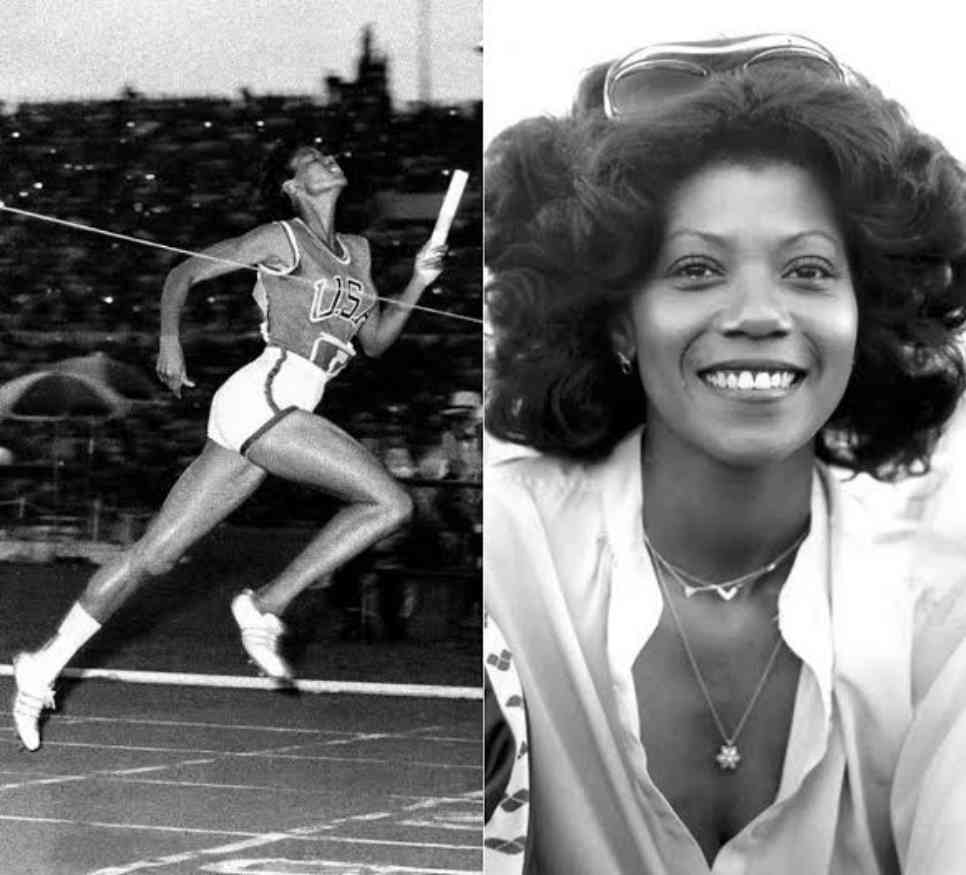
Wilma Rudolph overcame childhood polio to become the fastest woman in the world, winning three Olympic gold medals at the 1960 Rome Games and becoming the first American woman to do so in a single Olympics.
She built a life after track built on education, youth advocacy, and civil rights before dying of brain and throat cancer in 1994 at age 54.
Wilma Rudolph Biography
She was born prematurely on June 23, 1940, weighing just four and a half pounds, in Saint Bethlehem, Tennessee, now part of Clarksville.
Wilma Rudolph was the 20th of 22 children fathered by Ed Rudolph across his two marriages, the fifth of eight children from his second marriage to Wilma’s mother, Blanche, a domestic worker who cleaned houses six days a week while Ed worked as a railway porter.
The family moved from the small farming community of St. Bethlehem into nearby Clarksville shortly after Wilma’s birth, and her older siblings helped care for her as a sickly, premature infant.
At age four, Rudolph contracted polio, a disease that attacks the central nervous system, on top of earlier bouts with double pneumonia and scarlet fever, leaving her left leg weakened and requiring a metal leg brace.
Doctors told her family she would likely never walk normally again. Her mother refused to accept that prognosis, driving her 50 miles each way to Meharry Hospital, the Black medical college affiliated with Fisk University in Nashville, twice a week for two years for treatment, then learning physical therapy techniques to continue the work at home with help from Wilma’s siblings.
By age 12, Rudolph could walk without crutches, a brace, or corrective shoes. She later reflected on that period simply, recalling that doctors told her she would never walk again, but that her mother told her she would, and she believed her.
Once she regained full mobility, Rudolph turned to sports, first fighting for a spot on her high school basketball team after initially being turned down for a tryout.
She went on to Tennessee State University, known then as Tennessee Agricultural and Industrial State University, where she trained under legendary coach Ed Temple and earned a bachelor’s degree around 1963.
Career
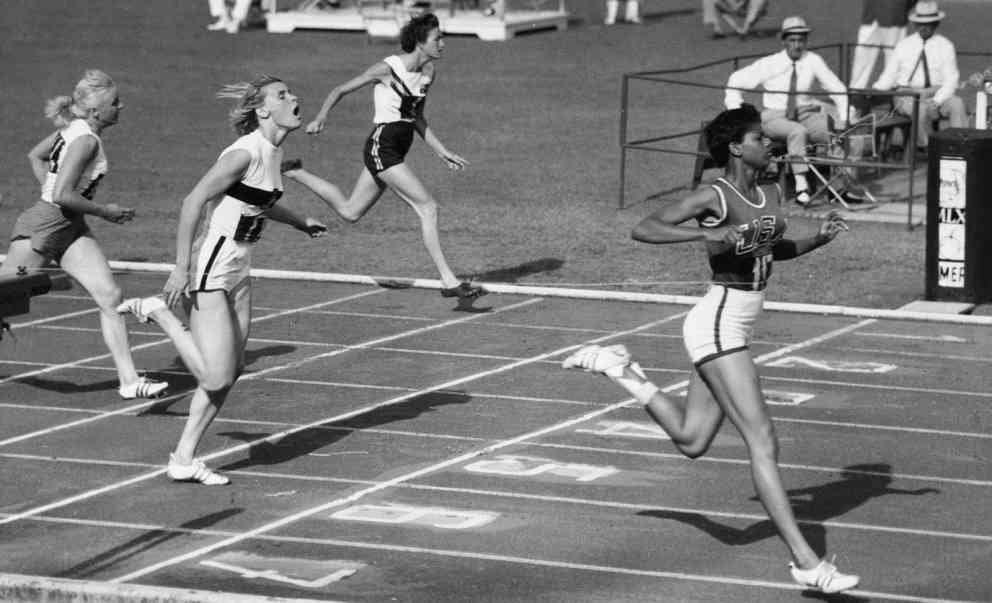
Wilma Rudolph made her Olympic debut at just 16, winning a bronze medal in the 4×100 meter relay at the 1956 Melbourne Games.
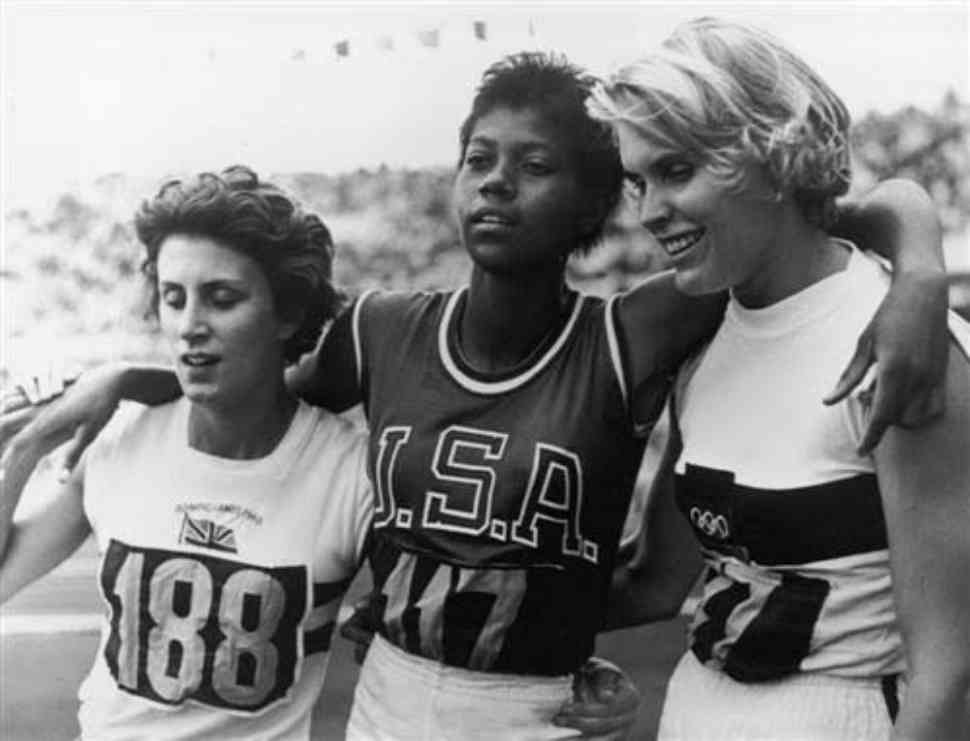
Her defining performance came four years later at the 1960 Rome Olympics, where she became the first American woman to win three gold medals at a single Olympic Games, sweeping the 100 meters, 200 meters, and 4×100 meter relay while setting world records along the way.
The achievement made her a global icon, helped by the fact that Rome was the first Olympics broadcast widely on television, earning her nicknames including The Black Gazelle and The Fastest Woman in the World.
Rudolph used her new platform directly for civil rights, insisting that her homecoming celebration in segregated Clarksville, Tennessee, be racially integrated, one of the first integrated municipal events in the city’s history.
Life After Track
Rudolph retired from competition in 1962 and moved into education, coaching, and advocacy. In 1967, Vice President Hubert Humphrey invited her to take part in Operation Champion, a Job Corps initiative that brought well-known athletes into poor inner-city neighborhoods to train young people in sports; the work later took her to Boston and to a Job Corps site in Poland Springs, Maine.
She went on to coach track at DePauw University in Indiana starting in 1987, and later served as a vice president at Nashville’s Baptist Hospital.
She founded the Wilma Rudolph Foundation, a nonprofit supporting amateur youth athletics based in Indianapolis.
She published an autobiography titled Wilma in 1977, later adapted into a television movie of the same name.
Marriage & Husband
Rudolph married twice. Her first marriage was to William Willie Ward, a fellow runner she met through the North Carolina College track team; the two married in 1961 and divorced in 1963.
That same year, she married Robert Eldridge, a man she had known since childhood in Clarksville, in a wedding announced in the local Leaf-Chronicle newspaper that July. Rudolph and Eldridge had four children together: Yolanda, born in 1958, before either of Rudolph’s marriages; Djuanna, born in 1964; Robert Jr., born in 1965; and Xurry, born in 1971.
Rudolph and Eldridge divorced in 1980 after 17 years of marriage, and Rudolph went on to raise her four children largely on her own.
Death
Wilma Rudolph was diagnosed with a brain tumor in 1994 that developed into cancer; she also had throat cancer at the time of her death.
She died on November 12, 1994, in Brentwood, Tennessee, at age 54, survived by her four children and eight grandchildren. Thousands attended her funeral at Tennessee State University’s Kean Hall.
In 1995, TSU named a six-story dormitory the Wilma G. Rudolph Residence Center in her honor, and the Women’s Sports Foundation continues to present the Wilma Rudolph Courage Award to outstanding women athletes.
She has also been honored on a U.S. postage stamp and remains enshrined in the National Track and Field Hall of Fame, the United States Olympic Hall of Fame, and the National Women’s Hall of Fame.